
Queer Romeo and Juliet of Wartime Prague: Same-Sex Love in the Holocaust
Between 1924 and 1942, for 18 years, Ludwig, a Jewish clerk from a Brno textile dynasty, and Paul, a Sudetengerman (an ethnic German living in Czech lands) lab assistant, lived together in Prague Vinohrady. It was a happy relationship, with mutual support, harmony and freedom from material worries. It all ended one early morning in March 1942, when the Prague police arrested the couple for a violation of Paragraph 175 of the German Criminal Code, which criminalized sexual acts between men. Three months later, both men were sentenced to long prison terms. Ludwig, as a Jew, was eventually deported to Auschwitz and murdered; Paul was set free half a year after the liberation, which did not apply to him as a gay man.
We will not find this story in the annals of the Holocaust of Czech Jewry, nor in the histories of wartime occupied Czechoslovakia. Queer Holocaust history has been systematically silenced as unworthy. In her talk, Anna Hájková explains how the silences on same-sex desire in the Shoah came to be and how they can help us understand history better — and more inclusively.
About the speaker
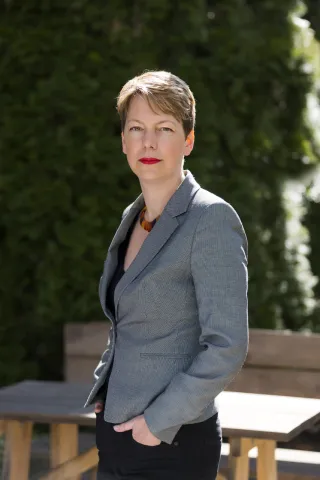
Anna Hájková is reader for modern European continental history at the University of Warwick, where she co-directs the Centre for Global Jewish Studies. Her first book, The Last Ghetto: An Everyday History of Theresienstadt, came out in 2020 with Oxford University Press. Her second book, People Without History are Dust: Queer Desire in the Holocaust (University of Toronto Press, 2025) was awarded the National Jewish Book Award 2026.
About the Holocaust Memorial Lecture
Now in its 37th year, the annual Holocaust Memorial Lecture has welcomed distinguished scholars and public figures whose work remembers the victims of the Holocaust while examining its enduring significance for understanding genocide, persecution and mass violence.