Richard Harrod is a PhD candidate in the Department of History. His research focuses broadly on the social and political history of the 19th- and 20th-century Middle East and Indian Ocean, with special concentration on the Arab world.
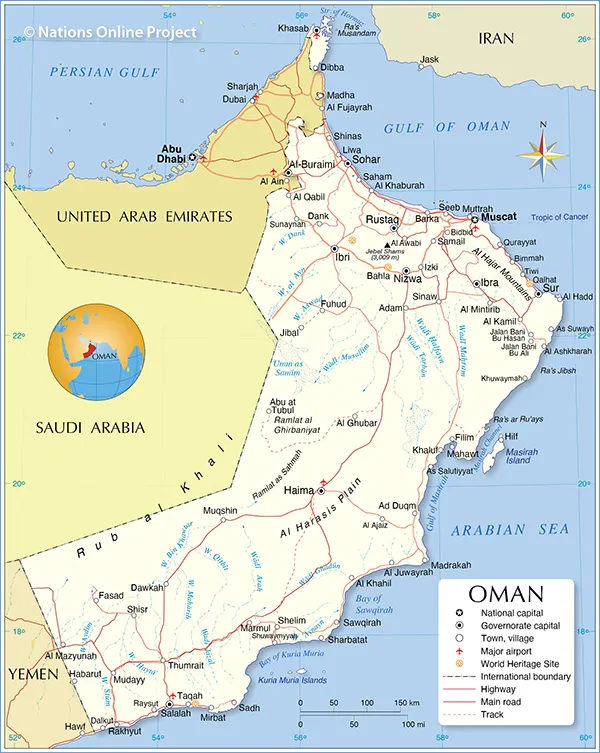
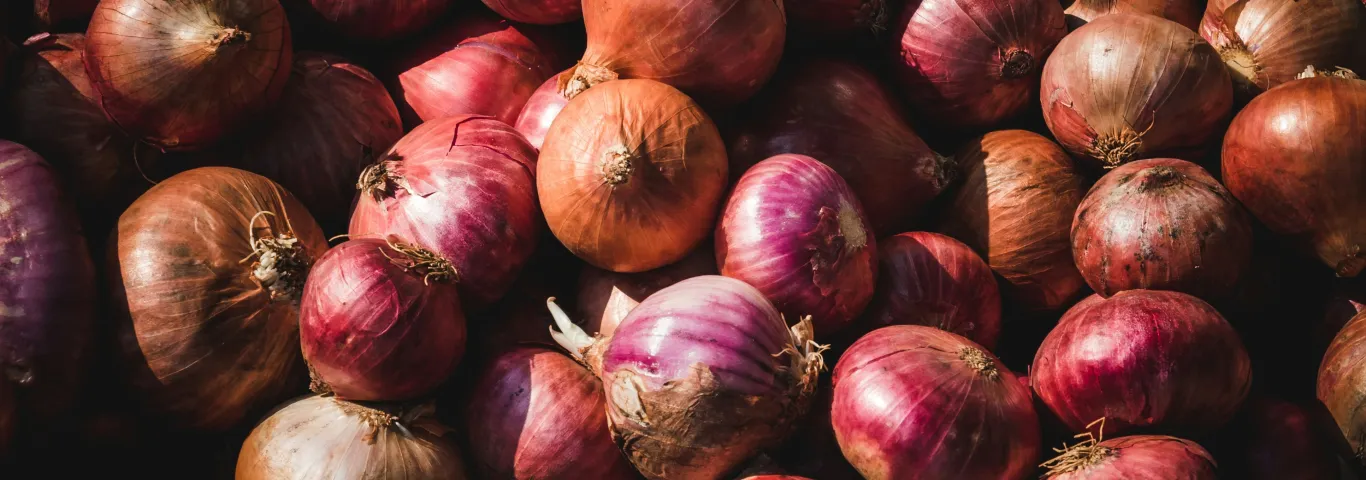
In the early 1960s, the farmers in the oasis city of Nizwa, in the interior of Oman, had a problem. The Poona red onion, which a new experimental farm had introduced to Nizwa’s soil in 1961, had grown so successfully that they glutted the market and collapsed the local price. This onion cultivar was not native to Nizwa. It was originally from India (Poona or Pune in Maharashtra). However, Nizwa and its inhabitants were in a unique position. The largely agricultural community had been at the center of a war erupting intermittently from 1954 to 1959. In its aftermath, officials in the victorious government of the Sultan of Muscat were looking for ways to demonstrate to the locals that they were capable of bringing something to the region other than destruction. They settled on having an experimental farm introduce novel, supposedly beneficial cultivars to “help” the local farmers.
Nizwa’s overproduction of Poona red onions exposes how a government misjudged what was beneficial for newly conquered subjects. That is, perhaps, unsurprising, but it also reveals the ways those people responded with unexpected forms of control and adaptation amid a loss of local sovereignty.
Until the mid 1950s, southeastern Arabia had been effectively divided between two polities. The coastal Sultanate of Muscat claimed suzerainty over the whole region, but, in reality, it was part of Britain’s informal empire. The interior of the country was ruled by the Imam of the Ibadi Muslims, and his capital was Nizwa. The Sultanate of Muscat and the Imamate had functioned as two autonomous states governing an intertwined population since 1920, when a treaty had settled their last conflict. However, by the early 1950s, a British-backed oil company, Petroleum Development Oman, had determined that if Oman had oil, it was in the interior of the country. Thus, the corporate-sultanic alliance invaded the interior in 1954, finally deposed the Imam in 1959, and cleared the way for oil prospecting and extraction in the oil-rich area of the country. The year 1959 was also when the new government opened the experimental farm to try to gain the loyalty of the conquered populace by introducing modern scientific agriculture.

If we consider agricultural “success” as only represented by increased crop yields, then the Poona red onion in Nizwa was a triumph for the experimental farm. However, the surplus of onions and the market glut were a serious problem for the Nizwanis. Yet rather than waiting for the new government to offer a solution, a group of farmers organized themselves as the Onion Growers’ Cooperative. Through their connections with the farm’s supervisor, they secured a contract with a client of a scale to match the size of the crop: their new government’s army.
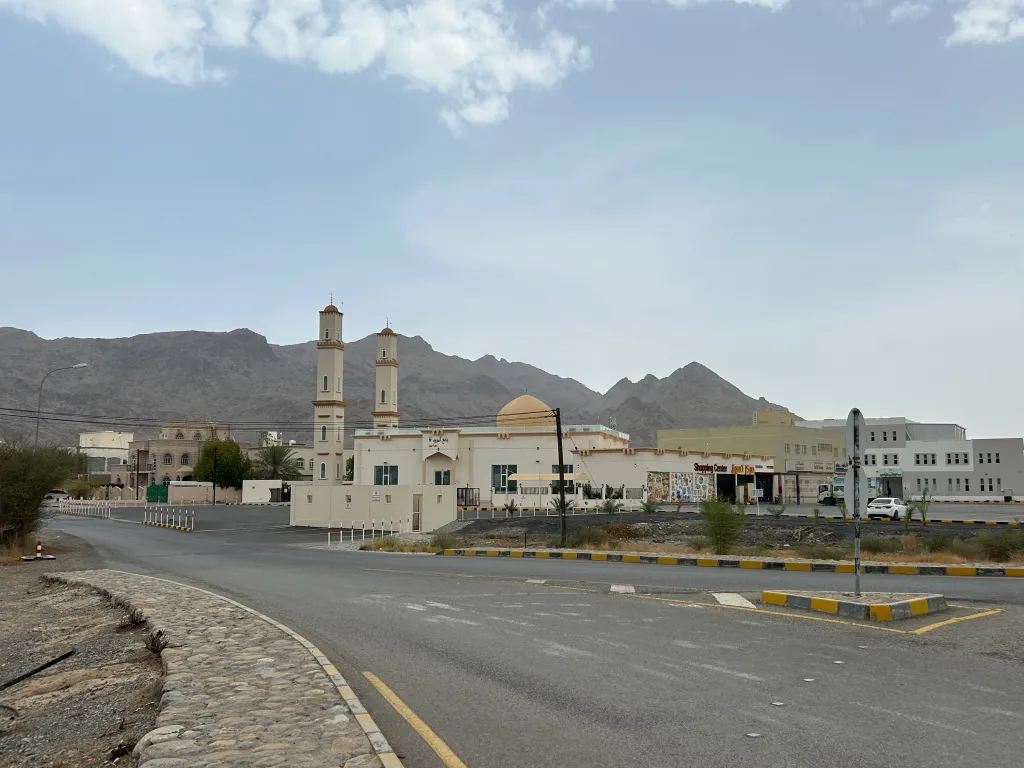
Initially, the experimental farm’s staff was responsible for weighing, packing and transporting the onions to the army headquarters. The farmers merely brought them to the farm. However, the cooperative members gradually took over these duties, and by the early 1970s, they were selling tens of thousands of pounds of onions to the army. In September 1970, the cooperative purchased its own scale for weighing the onions and began taking them directly to the army’s trucks for transport to Muscat. In 1971, the farmers successfully petitioned the government for an increase in the price of onions. Furthermore, an economic survey from 1972 states that because there had been a delay in payment from the agricultural supervisor to the cooperative, the farmers expressed a desire to handle payments directly with the army. This suggests an enthusiasm among the members for autonomy and direct relations between them and their government client.
The Sultan’s advisors always framed the work of the experimental farm as benevolent. It was educating local farmers about new crops and providing extension services. However, the overall coercive context from which the experimental farm emerged could not have been lost on the Nizwanis. They had lived through a war of conquest in which the British-sultanic forces had blown up entire villages, bombed water infrastructure and machine-gunned farmers’ livestock as ways to “persuade” the populace to withdraw support from the Imam. They likely felt no love for the new government but felt compelled to cooperate. Nonetheless, the members of the Onion Growers’ Cooperative asserted their agency as best they could. Through their collective action, they were able to turn a profit and attain some control over their lives by feeding the new state. Their persistence and relative success demonstrate that conquest is never total. Even following defeat, individuals and groups are able to assert local control.
Headline photo by Goh Rhy Yan via Unsplash.