Interview with Faculty Fellow Thembelani Mbatha
South Africa’s transition from apartheid to democracy launched a national effort to reckon with the past, most notably through the Truth and Reconciliation Commission (TRC). Yet reconciliation has not resolved the question of how to address apartheid’s enduring effects. In his current book project, “Specters of Memory: Regimes of Remembrance and the Aesthetic Afterlives of Apartheid,” Thembelani Mbatha, assistant professor of African and African American studies and a Faculty Fellow in the Center for the Humanities, examines how artists, writers and other cultural practitioners challenge dominant narratives of remembrance and make space for histories that official accounts may leave unaddressed.
Below, Mbatha discusses the limits of official approaches to historical memory, the work of artists who resist calls to move on from apartheid and the possibilities for imagining a more just future without treating the past as settled.
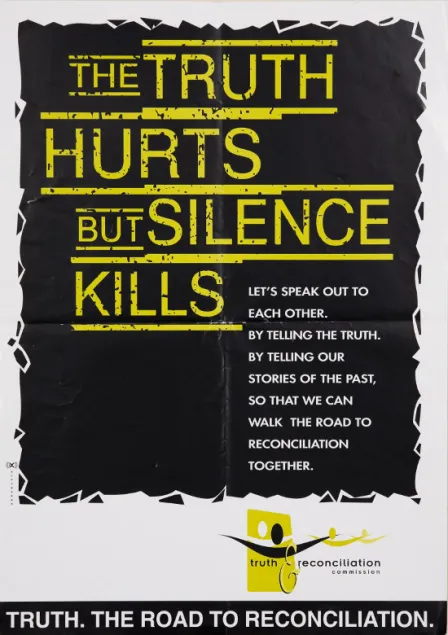
Your book will argue that South Africa’s dominant way of remembering apartheid, shaped in large part by the Truth and Reconciliation Commission (TRC), has not fully accounted for the ways apartheid’s effects continue into the present. What does the TRC’s approach to memory leave out?
Generally speaking, yes, that is the intellectual conversation of which “Specters of Memory” wishes to be a part. My primarily gripe with the TRC is that its attraction to the otherwise commendable objectives of reconciliation and forgiveness may have produced a politics of memory reluctant to sit with less conciliatory approaches to the past.
In the book, I am therefore interested in understanding exactly what registers of historical repair and formulations of justice become possible when these less conciliatory practices of memory are treated not as a threat to the democratic dispensation but as an invitation to interrogate some of its more fundamental claims about what historical restitution should look like.
Your book will focus particularly on the “Black post-apartheid generation.” Who is this generation, and how has its relationship to apartheid and its history differed from that of previous generations?
In the book, I resist the temptation to use the term “Black post-apartheid generation” to refer strictly to those born near the end of and in the immediate aftermath of apartheid. This chronological framing has always felt too limited to me.
Rather, I deploy it more broadly to designate those artists — born both during and after apartheid — whose work has largely taken place within the temporally entangled contexts of post-apartheid democracy. In this sense, “Black post-apartheid generation” marks an aesthetic and political practice — one that predates the democratic moment, to be sure — that has not always wanted to be captured by the state’s politics of repair.
While previous generations of Black artists had largely focused on exposing the brutalities of apartheid or, at least post-1994, in celebrating the advent of democracy, the artists I consider — which include Koleka Putuma, Haroon Gunn-Salie, Zolile Petshane, Zanele Muholi and Lesego Rampolokeng, to name a few — inherit this “political” investment but, crucially, also appear more prepared to experiment with form and local epistemes in ways that want to decenter the state as the primary vehicle of historical repair.
You’re looking at literature, photography and legal cases as alternative ways of remembering apartheid. What can these forms of expression and action reveal about the past that an official historical record or reconciliation process cannot?
My book is motivated, at its most basic level, by the conviction that art and artistic practice may allow us to respond to the epistemological gaps and biases that invariably haunt official channels of history. The official historical record, as some have already shown in the South Africa’s context, has tended to tell a story that is too tethered to the country’s politics of nation-building in a way that risks obscuring that which may remain in excess of its claims.
I am therefore interested, through Putuma’s poetry for example, in literary practices that reject such established narratives of the country’s past for their likelihood to generate historical amnesia. I am, as I show in my reading of Muholi’s work, similarly invested in photographic traditions that put pressure on the claim that mere political recognition naturally leads to restitution.
I see in these alternative orientations toward the past not merely a mode of historical critique but indeed an opportunity to imagine historical justice from practices that formally continue to make claims for justice where the post-apartheid moment has, at times, wanted to suggest them realized or exhausted.
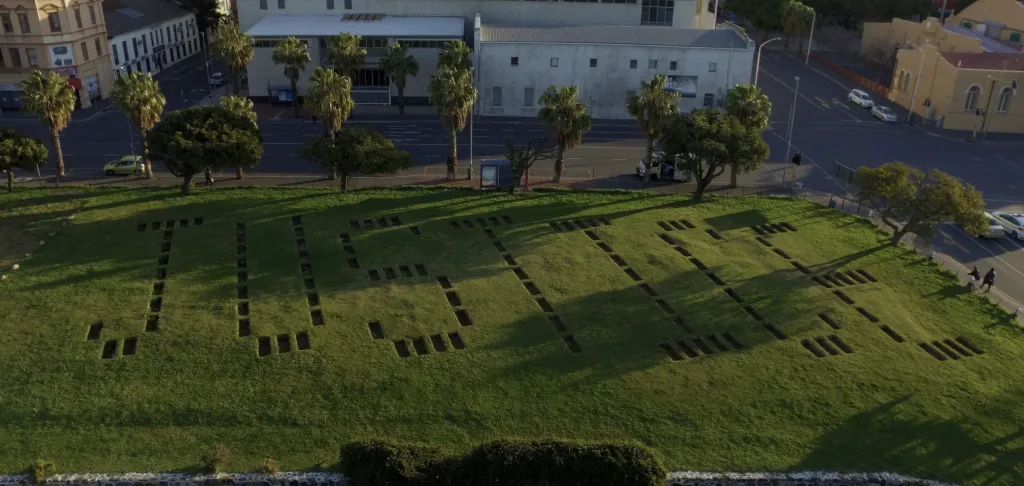
Several of the people and works you’re examining seem to resist the idea that South Africa should simply “move on” from apartheid. Could you give us an example from the book that illustrates what this resistance looks like — and why continuing to revisit the past matters?
Though some have wanted this to be the case, no person of sound historical judgment has found the suggestion that Black South Africans simply “move on” from the past to be that compelling. Still, this attitude continues to shape a significant part of daily life in South Africa, allowing its proponents to explain today’s economic and political difficulties as exclusively attributable to the post-government — which happens to be Black — while downplaying the stubbornness of the country’s violent and racist past.
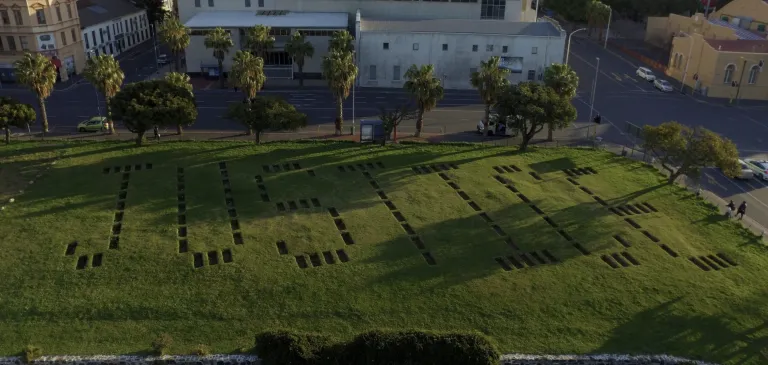
In one of my chapters, where I offer a reading of Haroon Gunn-Salie’s Crying for Justice and Senzenina, I focus not only on how the apartheid past continues to be embedded within the democratic present but also in showing how Gunn-Salie experiments with what I call “formal incompletion” as part of his recognition of how the present has not fully exhausted what the past continues to ask of us. Revisiting the past matters, I show in this chapter, insofar as it allows us to imagine alternative formulas of remembrance that may help us avoid the mnemonic pitfalls of dominant regimes of repair.
Ultimately, you’re making the case that memory is a way of imagining justice and the future, rather than simply preserving the past. What do you hope readers will understand differently about memory, reconciliation and justice after reading “Specters of Memory”?
I have seen a tendency in existing scholarship to understand memory as a repository of the past — which it is, to be sure — that once accessed would potentially enable some form of historical repair for those seeking it. A bit different to this, my work sees memory as a contested terrain whose aesthetic experimentations with allows us to continually ask what justice may look like for those whose traumas have yet to be fully codified as being part of the country’s recognized records.
It is for this reason, then, that I have chosen to principally work with “unofficial” modalities of remembrance — poetry, visual cultures, music, etc. — as I see them most suited to the type of epistemologically radical relation to the past I investigate in “Specters of Memory.”
What has emerged in the writing of this book is that, while theoretically noble, the version of reconciliation currently exercised by the country has required that Black South Africans be prepared to relegate apartheid to the past even as its legacies continue to materially shape their very lives. Against this, my book calls for a form of justice that does not require such an amnesiac relationship to the past but rather delineates a form of reparative justice that refuses to make too sharp a distinction between apartheid history and its democratic afterlives.